

Flex banner is a printable sheet material made from PVC (polyvinyl chloride) coated onto a woven or knitted fabric base, engineered specifically for large-format advertising graphics. The finished sheet is flexible, weather-resistant, and dimensionally stable — properties that make it the dominant substrate for outdoor signage, trade show displays, and branding installations worldwide.
The numbers that matter
| Attribute | Detail |
|---|---|
| Base material | PVC-coated polyester fabric |
| Typical weight range | 280–720 GSM (varies by construction and application) |
| Common widths | 1.6 m, 3.2 m, 5 m+ depending on printing equipment |
| Ink compatibility | Solvent, eco-solvent, UV, latex |
| Typical outdoor lifespan | 1–5 years depending on material quality, UV exposure, printing method, and installation conditions |
| Key certifications | ISO 9001 manufacturing systems; RoHS may apply for specific export markets |
| Primary applications | Outdoor signage, indoor displays, event branding, building wraps |
What Is Flex Banner?
Flex banner is a composite material — the structure and function of the sheet depend on every layer working together. The base layer is a woven polyester scrim (the structural skeleton), and PVC compound is calendered or laminated onto both faces to create a smooth, printable surface.
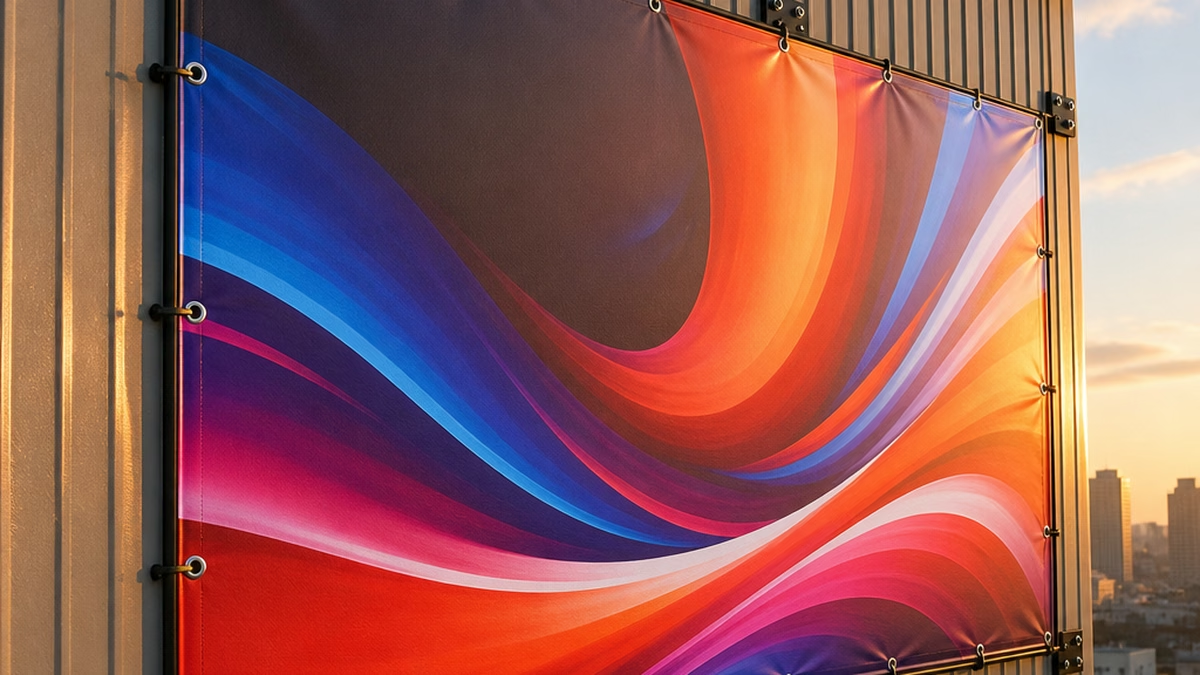
The term “flex” signals that the sheet bends without cracking — a critical property when banners must be rolled for shipping, stretched across frames, or draped around curved structures. Rigid materials like aluminum composite or foam board cannot do this; flex can.
This flexibility comes from plasticizers added to the PVC formulation. The proportion of plasticizer controls the trade-off between softness (easier to roll and install) and dimensional stability (resistance to stretching under wind load). A banner that is too soft will sag between grommets; one that is too stiff will crack in cold temperatures.
The rule: Check the plasticizer migration specification before ordering flex for overlapping or backlit applications — migrating plasticizers cloud film laminates and reduce backlight transmittance within weeks.
How Is Flex Banner Made?
The two dominant manufacturing processes are calendering and lamination, and understanding the difference tells you a great deal about the material’s long-term performance.
Calendering forces molten PVC compound through heated rollers under high pressure, embedding it directly into the polyester fabric. The result is a single unified sheet where PVC and scrim are inseparable. Calendered flex tends to have better ink adhesion and longer outdoor durability — it’s the process we run on our five modern production lines in the US-serving export range.
Lamination bonds pre-cast PVC films to both sides of the fabric using adhesive or heat. Laminated flex is faster and cheaper to produce, but the bond between film and scrim can delaminate under prolonged UV exposure or heat cycling, which is why it’s generally used for short-term indoor applications.
After the base sheet is formed, the surface receives a coating layer formulated for the intended printing technology. Solvent-ink flex uses a different surface chemistry than latex printing — the coating controls ink spread, dot gain, and scratch resistance.
The mistake to avoid: Ordering solvent-coated flex for a latex printer (or vice versa) produces ink adhesion failures that appear 24–48 hours after printing, not immediately off the machine. Always confirm coating type against your printer’s ink system.
| Manufacturing Method | Outdoor Durability | Ink Adhesion | Flexibility | Typical Cost |
|---|---|---|---|---|
| Calendered | Higher | Excellent | Good | Higher |
| Laminated | Moderate | Good | Higher | Lower |
Common Types of Flex Banner
The flex category contains several distinct products, each engineered for a specific set of conditions. Treating them as interchangeable is the fastest path to a failed installation.
Frontlit flex is the standard outdoor PVC banner type, featuring a white printable surface with a blockout backing layer that reduces light penetration from behind. Common outdoor signage applications use 400–550 GSM frontlit PVC, depending on durability requirements. Surface smoothness, coating quality, and ink compatibility are key factors affecting final print quality.
Backlit flex is a translucent PVC material designed for illuminated sign cabinets and lightbox displays. It allows light to pass through and diffuse evenly for consistent illumination. Typical weights are around 300–450 GSM, depending on required brightness and structural requirements.
Mesh flex contains perforated openings within the material structure, commonly offering 30–50% open area depending on design. The perforations reduce wind load, making mesh flex suitable for large outdoor banners on building facades, fences, and construction barriers. However, the open structure may reduce image detail compared with solid PVC flex.
Eco-solvent / latex-compatible flex carries a surface coating modified for water-based ink systems, responding to buyer demand for lower-VOC printing. This type has grown significantly as EPA volatile organic compound regulations push print shops toward latex and UV inkjet systems.
Fabric banner (sometimes called flag fabric or polyester fabric banner) is technically distinct from PVC flex — it’s a woven or knitted polyester without PVC coating, relying on dye-sublimation printing. It is lighter and more packable, but lacks the outdoor weatherability of PVC. We cover this product line separately because buyers increasingly confuse the two categories when sourcing.
Applications of Flex Banner
The reason PVC flex dominates outdoor advertising is straightforward: no other large-format material combines printability, durability, and cost per square foot at the same level.
Outdoor billboards and roadside signage are among the most common applications. Large-format billboard structures often use frontlit PVC flex printed in multiple panels and joined through heat welding or other installation methods. The material is selected for its resistance to UV exposure, rain, and temperature changes in outdoor environments.
Trade show and event displays rely on flex for pop-up backdrops, step-and-repeat branding walls, and hanging banners. Indoor flex (300–340 GSM) is sufficient here; the lower weight reduces shipping cost and makes fabric-style display hardware viable.
Building wraps and construction hoardings use heavy-weight frontlit or mesh flex. A building wrap covering scaffolding may span thousands of square feet — mesh flex reduces wind load on the structure while still carrying full-bleed branding graphics.
Retail point-of-sale and in-store promotions use backlit flex in lightbox frames. Fast-food chains and big-box retailers rotate these displays seasonally; the material’s dimensional stability under frame tension is the deciding specification here.
The exception: For museum-quality or fine-art reproduction displays, PVC flex is not the right choice. Off-gassing from plasticizers can damage adjacent archival materials. Rigid aluminum-substrate prints or cotton-canvas fine-art media are the appropriate alternatives.
Flex Banner vs Other Advertising Materials
BuBuyers often compare PVC flex banner with other large-format graphic materials that look similar but perform differently. The right choice depends mainly on installation environment, required durability, and whether the display needs to be flexible or rigid.
| Material | Structure | Best Use | Typical Outdoor Durability | Relative Cost |
|---|---|---|---|---|
| PVC flex banner | PVC-coated polyester fabric | Banners, billboards, building wraps, large-format graphics | About 2–5 years depending on material grade and exposure conditions | Low |
| Aluminum composite panel (ACP) | Aluminum skins with polymer or mineral core | Permanent signs, architectural signage, rigid displays | 10+ years with proper coating and installation | High |
| Fabric banner (polyester) | Woven or knitted polyester textile | Indoor displays, events, some outdoor applications | Shorter outdoor life than PVC flex in most environments | Medium |
| Vinyl sticker media | Adhesive-backed PVC film | Vehicle graphics, windows, surface graphics | Several years depending on laminate, UV exposure, and installation | Medium–High |
| Coroplast / foam board | Corrugated polypropylene or foam board sheet | Temporary signs, indoor displays, short-term outdoor use | Short-term outdoor use depending on weather conditions | Very Low |
The clearest diagnostic: if the application requires rolling up the finished print for transport, PVC flex is almost always correct. Aluminum and rigid foam board cannot be rolled; fabric lacks the outdoor durability for most climates; vinyl sticker media adds adhesive complexity and removal cost.
For buyers evaluating a custom flex printing service, the material specification is only half the decision. Confirm that your supplier’s quality control covers raw material inspection and in-process coating thickness checks — not just final visual inspection.
The right flex specification depends on three variables: installation environment (indoor vs outdoor), intended print technology (solvent, latex, UV), and display duration. Get those three parameters defined before comparing GSM or price per roll — everything else follows from them.
Have a project or a spec sheet in hand? Talk to kunmao2026-com — real engineers answer.
Frequently asked questions
What Is Flex Banner?
Flex banner is a large-format printing substrate made from PVC-coated polyester fabric. The PVC coating provides weather resistance and printability, while the internal fabric structure provides tensile strength and dimensional stability.
Available in frontlit, backlit, mesh, and other constructions, flex banner is widely used for outdoor signage, billboards, retail displays, trade shows, and event graphics. Typical material weights range from approximately 300–650 GSM, depending on the construction and application.
What About The Numbers That Matter?
Standard flex banner specifications vary by product type and intended use. Common roll widths range from approximately 54 inches to over 10 feet, with wider formats available for specialized large-format applications.
Material weight typically ranges from 300–650 GSM. Backlit flex is often lighter, commonly around 300–380 GSM, while heavier outdoor frontlit products are frequently selected for billboard and building-wrap applications.
Print performance depends on the printer, ink system, coating, and viewing distance rather than the banner material alone. Outdoor-rated flex banners are designed to withstand UV exposure and weather conditions, with service life commonly ranging from about 2–5 years depending on material quality, installation, and environment.
Sources
[1] RoHS Directive Explained: Compliance for Electronics and … — ecovadis.com
[2] D1003 Standard Test Method for Haze and Luminous … — astm.org
[3] National Emission Standards for Hazardous Air Pollutants … — epa.gov
[4] Outdoor Advertising Association of America (OAAA) Archives … — archives.lib.duke.edu
[5] The environmental impact of end-of-life PVC flex banners … — sciencedirect.com
[6] The influence of flex banner types on the impact and … — iopscience.iop.org


